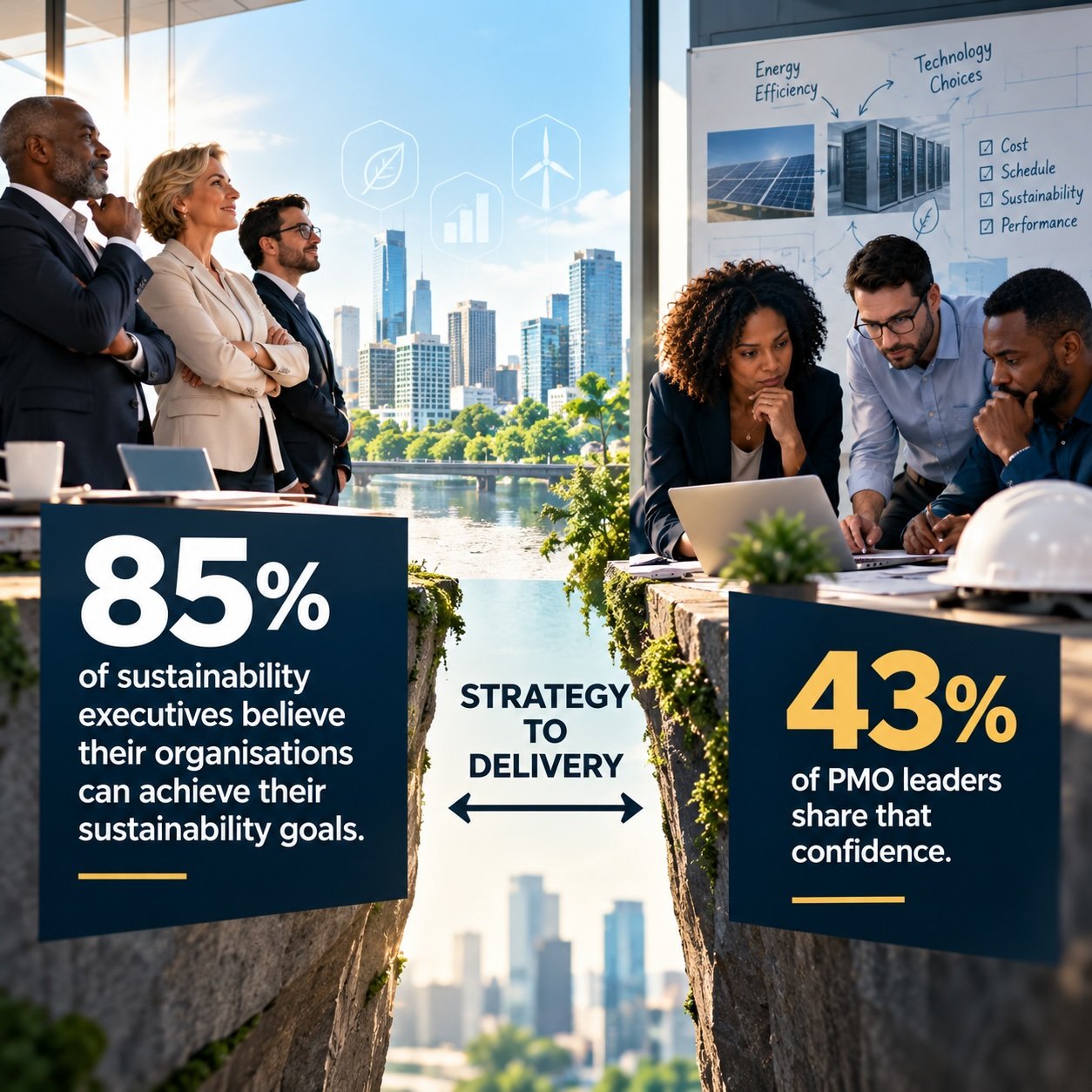
85% of sustainability executives believe their organisations can achieve their sustainability goals. Only 43% of PMO leaders share that confidence. That is quite a difference, especially when both groups are working towards the same organisational objectives.
The figures come from PMI and Green Project Management's 2026 research, Executing Sustainability Strategy: When Ambition Meets Reality, involving nearly 1,600 professionals across 35 countries. Only 20% of project professionals reported being extremely confident their organisations could achieve those goals. The difference raises questions about what happens between setting a strategy and actually delivering it.
The research points to challenges including unclear objectives, difficulty translating sustainability benefits into business value, and commitments being pushed aside when delivery pressures increase. Executives may establish sustainability commitments, approve investment and communicate ambitious targets. But the professionals responsible for delivery must navigate competing priorities, limited resources, technical constraints, deadlines and difficult trade-offs.
Consider a data centre modernisation programme intended to increase computing capacity, reduce operating costs and lower energy consumption. These objectives may complement one another, but decisions about architecture, infrastructure, procurement and ongoing operations determine how well they come together. If sustainability requirements are considered only towards the end of implementation, opportunities to influence the outcome may already have passed.
This is why project and programme professionals need to help translate strategic commitments into measurable requirements from the beginning. Those requirements should be assessed alongside cost, schedule and performance, with clear ownership of the intended benefits. Conflicts need to be raised while there is still time to change the design or delivery approach, rather than discovered at handover.
Another finding reinforces the concern: while 79% of respondents see sustainability as important to long-term organisational success, only 41% say it is fully integrated into projects and business functions. The lesson extends beyond sustainability. The same disconnect can arise with digital transformation, innovation and other strategic initiatives when executive ambition moves faster than organisational delivery capability.
Perhaps one of the most useful questions we can ask when reviewing a strategy is whether the people responsible for delivering it have the same confidence in its feasibility as those who approved it.
Good ideas get better in conversation.