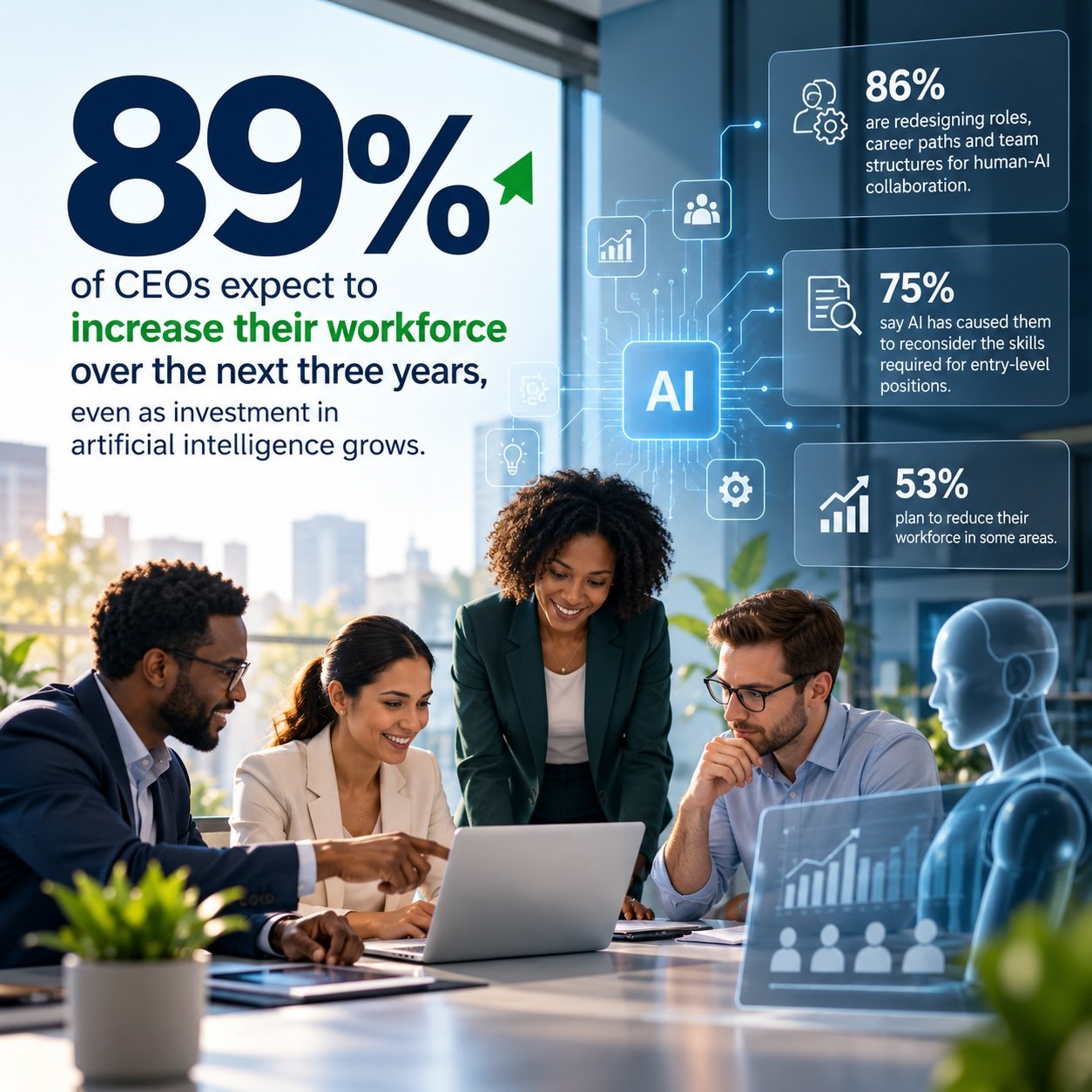
89% of CEOs expect to increase their workforce over the next three years, even as investment in artificial intelligence continues to grow.
That is one of the findings from KPMGs 2026 US CEO Outlook, which surveyed 400 CEOs of large American companies. At a time when much of the conversation around AI focuses on job displacement, I find it interesting that so many business leaders are still planning to expand their workforce.
However, the more revealing findings are about how those jobs are expected to change. According to the research, 86% of CEOs are redesigning roles, career paths and team structures to accommodate human-AI collaboration, while 75% say AI has caused them to reconsider the skills required for entry-level positions.
There is an important distinction here. Organisations may be investing in AI to improve productivity while simultaneously creating demand for different capabilities. Some roles will evolve, new ones may emerge, and certain activities will require fewer people. In fact, 53% of respondents also indicated plans to reduce their workforce in some areas. These findings reflect executive intentions rather than confirmed employment outcomes, but they reveal how significantly workforce planning is changing.
For those of us involved in technology projects and digital transformation programmes, I think this development has important implications for how we define and manage successful implementation.A transformation programme that introduces AI into customer service, finance or operations is doing more than implementing technology. It is potentially changing how responsibilities are distributed, what employees need to know, how decisions are made and which capabilities the organisation must develop.
This means workforce readiness cannot simply be addressed through training shortly before go-live. It needs to form part of programme planning, from identifying how roles and processes will change to assessing skills gaps, redesigning workflows and establishing how performance will be measured once the new operating model is in place.
What interests me most is the opportunity this creates for project and programme professionals. As technology takes on more routine activities, the ability to connect technical delivery with business processes, people, organisational change and measurable outcomes becomes increasingly valuable.
KPMGs findings suggest that organisations are thinking beyond introducing AI tools towards redesigning how work gets done. The challenge for transformation professionals is ensuring that implementation approaches evolve alongside those ambitions.
Perhaps the future of digital transformation will depend as much on how effectively organisations redesign work and develop people as on the technologies they introduce.
Good ideas get better in conversation.