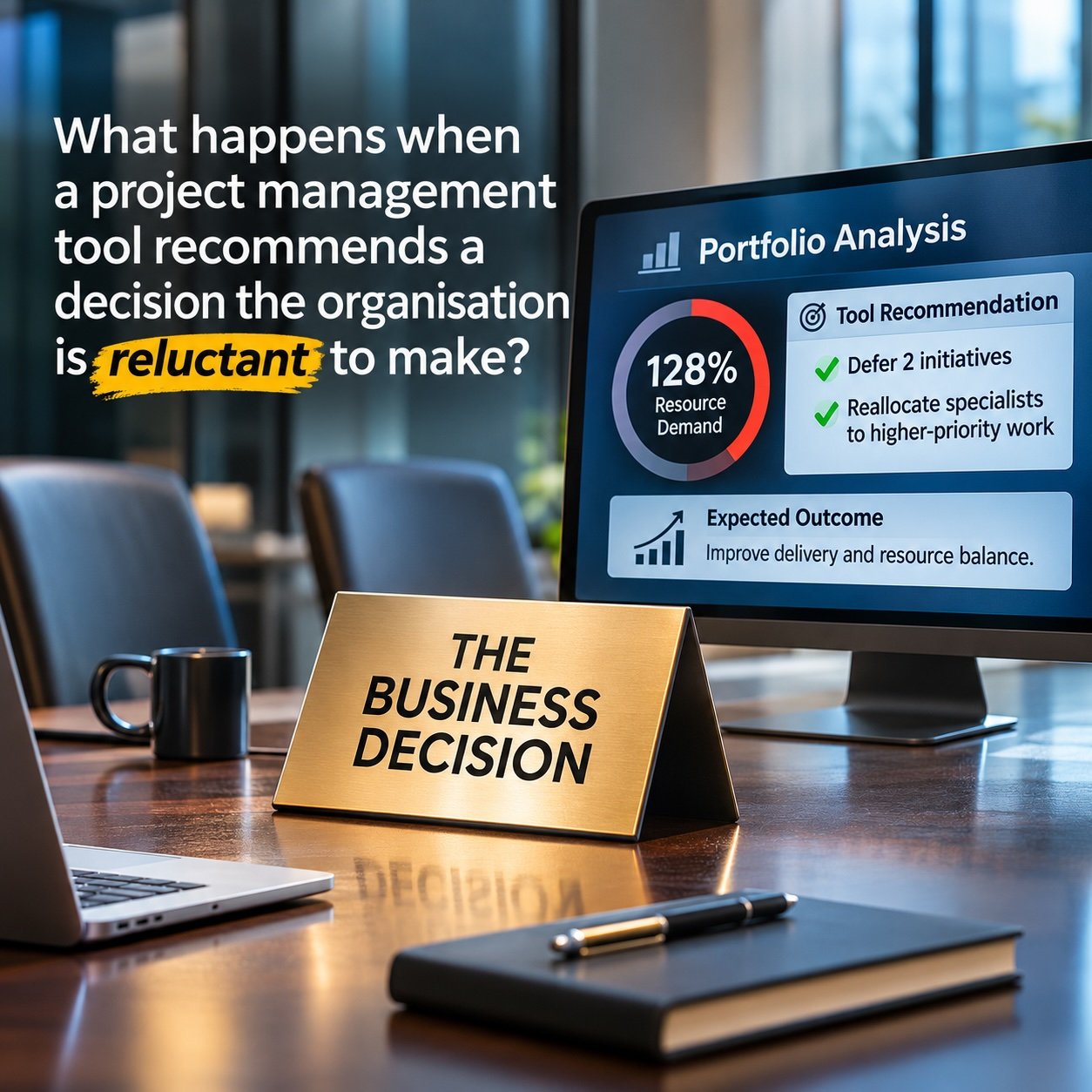
What do you do when a project management application suggests a decision that the organisation doesn't want to make?
A company invests in a portfolio planning platform, and realizes that it has fewer resources than it needs to complete all the projects approved by the company within the agreed timelines. Two initiatives are recommended to be deferred and the specialists reallocated to work on higher priority initiatives. But the leaders of those efforts have already made promises to the business, and are loath to change those commitments. The portfolio has stayed the same even though there is much greater awareness of the capacity constraints.
An interesting view on this conundrum is given in this review article published in the European Journal of Operational Research on 7 November 2026. The authors reviewed 145 papers from 41 journals for project selection, planning and execution. In only three cases was a proposed method reported to have been used, and in only three cases was an actual management decision influenced by the research. In one Huawei consulting project, the project duration was shortened by 18.1% after the implementation of a learning-based approach.
This is not to say that the other methods were not effective, or never used. Instead, it shows that there is a lack of published evidence from the development of an effective method to its use in practice. It also introduces a question as to how organisations judge their investments in project management tools.
A PMO may create a planning platform and track its success by users adopting it as well as the time saved in reporting and forecast accuracy. These are valid benefits but there should be more in the assessment if the business case also included a better use of resources and investment choices. Is there a greater ability to resolve resource conflicts earlier? Can the organisation respond to new evidence that comes up?
In my case, I would want to make sure I understood exactly what kind of decisions I would want to improve when introducing a new tool. Identify who is allowed to make the decision, what information that person is using to make the decision and how it will be evaluated when the decision is made. Once implemented, examine similar decisions to determine if the decision was influenced by these new facts and if the decisions had improved outcomes.
However, there may be good commercial/strategic justifications for not following a recommendation of a model. The aim is not to replace professional judgement with software, but to make sure evidence becomes part of the decision making process, that there are trade-offs, and that the effects of the decisions can be assessed.
For those who have introduced new project management tools, was it more difficult to implement the technology or to change the way decisions are made in the organisation?
Good ideas get better in conversation.