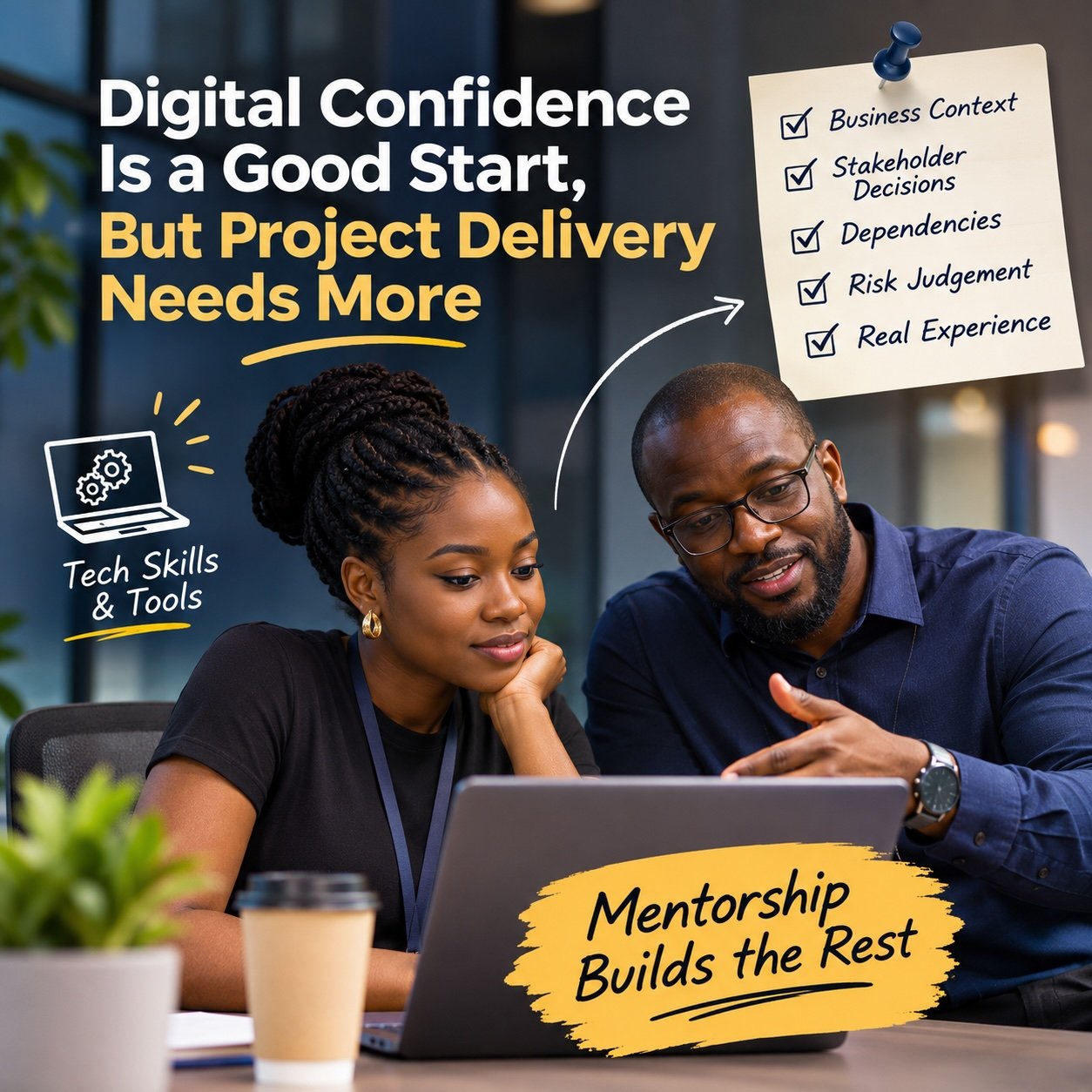
Being comfortable with technology is not the same as being ready to manage a technology project. Yet we sometimes expect younger professionals to arrive in project teams already knowing how digital delivery works.
An article published by the Association for Project Management on 4 November raised an interesting point about Gen Z professionals. In conversations with younger colleagues, the author found that some were frustrated by being treated as the “tech generation” and expected to introduce new ideas or use automation tools without enough training or understanding of how their organisations work. That is a more useful observation than the usual debate about which generation is better at work.
Think about a new project coordinator who can learn Jira or build a dashboard quickly. That technical confidence is helpful, but it does not automatically explain why a sponsor needs to approve a change, how a dependency affects another team, or when a delivery risk needs escalating. Those judgements require business context, exposure to real decisions and the opportunity to ask questions.
I think experienced project professionals sometimes forget how much of their own judgement was learned informally. The conversation after a difficult steering meeting, watching a programme manager negotiate a trade-off, or understanding why a seemingly simple request was rejected can teach lessons that no tool tutorial covers.
There is a practical opportunity here for PMOs and programme teams. Instead of giving early-career colleagues only administrative tasks, we can involve them in meaningful work with appropriate support: explain the business purpose behind the plan, let them observe decisions, ask them to assess an issue before sharing our own view, and discuss what happened afterwards. Responsibility can increase as their judgement develops.
This is not an argument for lowering standards or assuming every younger professional needs the same support. It is about separating familiarity with technology from professional capability, and making room for both to grow.
If we want the next generation of project leaders to think beyond tasks and dashboards, we need to show them how delivery decisions are actually made, not just which buttons to click.
Good ideas get better in conversation.